A great man is one who collects knowledge the way a bee collects honey and uses it to help people overcome the difficulties they endure - hunger, ignorance and disease!
- Nikola Tesla

Remember, remember always, that all of us, and you and I especially, are descended from immigrants and revolutionists.
- Franklin Roosevelt

While their territory has been devastated and their homes despoiled, the spirit of the Serbian people has not been broken.
- Woodrow Wilson

Milos Rastovic

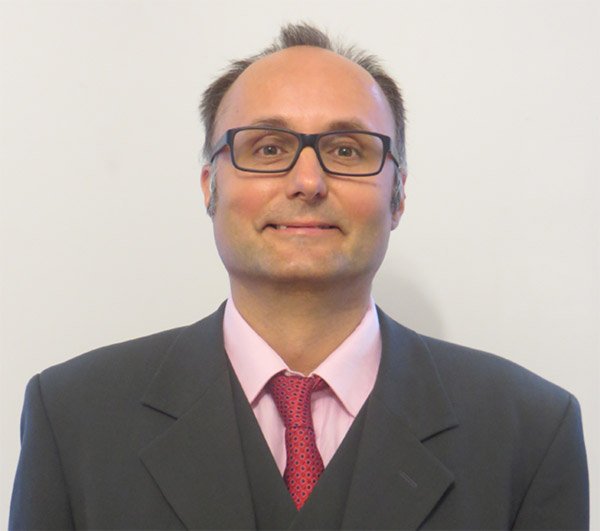
Milos Rastovic was born in Sombor, Serbia where he finished elementary and Gymnasium. His father, Ilija Rastovic, was a Professor in Gymnasium high school and poet who published eight books of poetry. Zivka Rastovic, his mother, worked in the insurance business. Rastovic earned a Bachelor Degree at the University of Belgrade, Department of Philosophy, with a work: “Eternal Recurrence of the Same in Nietzsche’s Philosophy.” After graduation, he was a Professor of Philosophy for eight years in high schools in Sombor. While teaching, he created thefirst philosophy website of its kind in Serbia to make philosophy more interesting and approachable for students. He earned his Masters Degree in Philosophy at Duquesne University in Pittsburgh, PA, U.S.A. He is a member of many professional societies in philosophy and political sciences and Slavic studies. He has presented papers at numerousacademic conferences and publishedarticles and reviews of books in the United States, Canada, and many European countries.

He currently works as the Cultural Outreach Coordinator for the Serb National Federation in Pittsburgh, PA--the oldest Serbian Fraternal Benefit Society in the United States since 1901. During his work at the Serb National Federation, he studied Serbian tradition, history, and culture as well as organizing a Serbian Movie Festival at the University of Pittsburgh. He has presented many books including the "Christian Heritage of Kosovo and Metohija" and given interviews to National Public Radio (NPR), Voice of America, National Television of Serbia, etc.

Through his merit, Novak Djokovic, World Tennis Champion from Serbia, and Emir Kusturica, famed movie director, became honorary members of the Serb National Federation in 2015 and 2016. He is a regular contributing author of the American Srbobran, the oldest continuously published Serbian newspaper in the world since 1906. He was the screenwriter for the documentary film “Tesla’s People” about history of Serbs in the United States. As a Cultural Outreach Coordinator, he has lectured throughout the United States about the history of Serbs in America.

He is a Board Member of the Tesla Science Foundation in Philadelphia and promotes Tesla’s nameamong many events and people as well as worked for the event “200 Years of Serbs in the United States.”

Official Website


SA


People Directory

Allex Mandusich

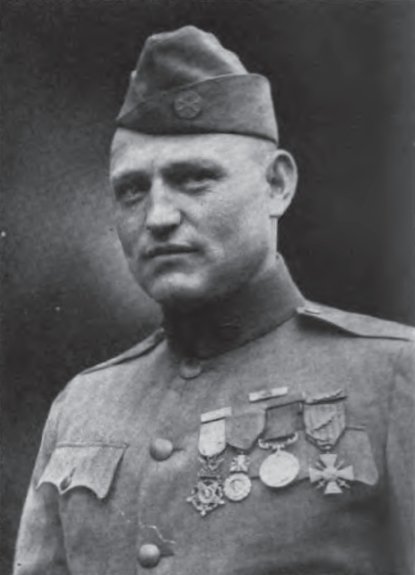
Andjelko "Big Jake Alex" Mandusich is a recipient of the Congressional Medal of Honor, and was one of the greatest Serbian-American heroes of World War I.

He was born on July 13th, 1887 at Sar Planina, Serbia. In 1905, at the age of 18, he immigrated to America.

When the US entered World War I, Mandusich immediately enrolled himself in the Army. During the battle in Amiens region in France in August of 1918, Jake, now a corporal, advanced his men at Chipilly Ridge; there were many casualties and in the heat of the battle Alex realized that all officers had been hit and that he was now the leader of his platoon. His men were pinned down by machine gunfire from a German nest thirty yards away. Under intense fire Manudsich made his way to the nest alone; he pulled out his bayonet and attacked..

Read more ...

Publishing

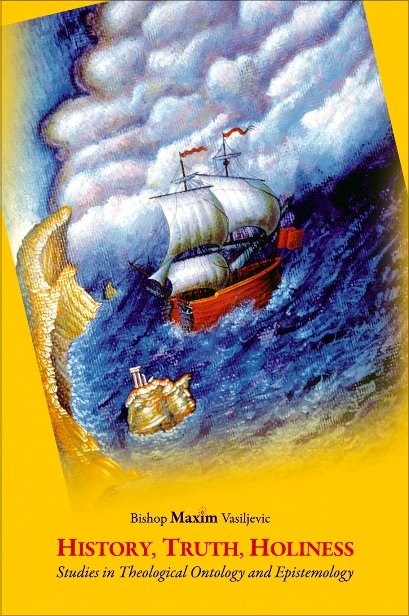
History, Truth, Holiness

by Bishop Maxim Vasiljevic

Bishop Maxim’s first book, described by Fr. John Breck as an “exceptionally important collection of essays” contributing to both the theology of being and also contemporary theological questions, is now available! Christos Yannaras describes Bishop Maxim as “a theologian who illumines” and Fr. John McGuckin identifies his work as “deeply biblical and patristic, academically learned yet spiritually rich.” The first half of the book collects papers emphasizing theological ontology and epistemology, reminding us how both the mystery of the Holy Trinity and that of the Incarnation demand that we rethink every philosophical supposition; it includes chapters on holiness as otherness, truth and history, and the biochemistry of freedom. The second half of the book features lectures dedicated to the theological questions posed by modern theology, including studies of Orthodox and Roman Catholic ecclesiology, liturgics, and the theology of icons.