A great man is one who collects knowledge the way a bee collects honey and uses it to help people overcome the difficulties they endure - hunger, ignorance and disease!
- Nikola Tesla

Remember, remember always, that all of us, and you and I especially, are descended from immigrants and revolutionists.
- Franklin Roosevelt

While their territory has been devastated and their homes despoiled, the spirit of the Serbian people has not been broken.
- Woodrow Wilson

Biljana D. Obradović and John Gery

Biljana D. Obradović, a Serbian-American poet, translator, and critic has lived in Greece, India, and the United States. She is associate professor of english at Xavier University of Louisiana, in New Orleans.

She has two collections of poems, Frozen Embraces and Le Riche Monde. Her poems also appear in Three Poets in New Orleans and in anthologies and magazines, such as Like Thunder: Poets Respond in Violence in America, Key West: A Collection, Poetry East, Bloomsbury Review, Prairie Schooner, and The Plum Review.

.

In addition to her own poetry, other works include her Serbian translation of John Gery's American Ghosts: Selected Poems, Stanley Kunitz's The Long Boat, Fives: Fifty Poems by Serbian and American Poets, A Bilingual Anthology, and a collection of Bratislav Milanovic's poems in The Unnecessary Chronicle. She also reviews books for World Literature Today and others.


Биљана Д. Обрадовић рођена је 1961. године у Београду, дипломирала је енглески језик на Филолошком факултету у Београду, пре тога је ишла у америчку основну школу у Солуну, а енглеску гимназију завршила је у Индији. Једно време је предавала енглески језик у школи "Милица Павловић", а онда је отишла у Америку, где је 1995. године докторирала на креативном писању. На Хавијер Универзитету у Луизијани предаје креативно писање и преводи збирку песама свога супруга Џона Герија "Амерички дух". У Србији је објавила две збирке песама, двојезично, на српском и енглеском: "Замрзнути загрљај" и "Богат свет". Биљана и Џон Гери имају сина Петра.


John Gery's poetry, criticism, and reviews have appeared throughout the United States and Europe, including in Callaloo, the Iowa Review, New Orleans Review, Paideuma, Prairie Schooner, and West Branch.

He has also been a collaborative translator of works in serbian, armenian, chinese, and french. A research professor of english at the University of New Orleans, he directs the Ezra Pound Center for Literature, Brunnenburg, Italy. He was a research fellow at the University of Minnesota and a Fulbright fellow at the University of Belgrade.

Among Gery's books of poetry are Charlemagne: A Song of Gestures, The Enemies of Leisure, American Ghost: Selected Poems (English-Serbian, translated by Biljana Obradovic), Davenport's Version, and A Gallery of Ghosts.

He lives in New Orleans with his wife, poet Biljana Obradovic, and their son Petar.


SA


People Directory

Jasna Popovic

Jasna Popovic (born May 10, 1979) is an award-winning Serbian pianist.

Popovic was born in Belgrade, Serbia, where she received her first piano lesson at six years of age. Upon graduating from the music high school in 1997, Popovic moved to Munich, Germany where she attended the Hochschule für Musik und Theater and studied under the guidance of Professors Gitti Pirner and Claude-France Journes. After performing in New York City, Popovic decided to remain living there. She is currently working on her solo album, which will primarily feature classical Serbian music.

Read more ...

Publishing

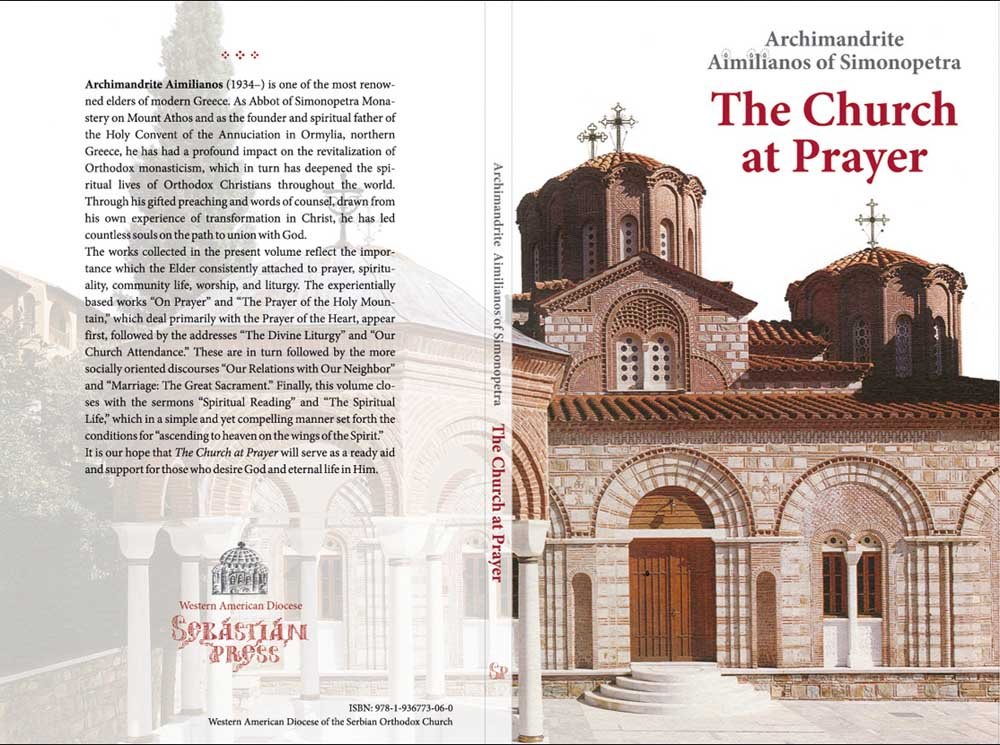
Jesus Christ Is The Same Yesterday Today And Unto the Ages

In this latest and, in every respect, meaningful study, Bishop Athanasius, in the manner of the Holy Fathers, and firmly relying upon the Apostles John and Paul, argues that the Old Testament name of God, “YHWH,” a revealed to Moses at Sinai, was translated by both Apostles (both being Hebrews) into the language of the New Testament in a completely original and articulate manner.  In this sense, they do not follow the Septuagint, in which the name, “YHWH,” appears together with the phrase “the one who is”, a word which is, in a certain sense, a philosophical-ontological translation (that term would undoubtedly become significant for the conversion of the Greeks in the Gospels).  The two Apostles, rather, translate this in a providential, historical-eschatological, i.e. in a specifically Christological sense.  Thus, John carries the word “YHWH” over with “the One Who Is, Who was and Who is to Come” (Rev. 1:8 & 22…), while for Paul “Jesus Christ is the Same Yesterday, Today and Unto the Ages” (Heb. 13:8).