A great man is one who collects knowledge the way a bee collects honey and uses it to help people overcome the difficulties they endure - hunger, ignorance and disease!
- Nikola Tesla

Remember, remember always, that all of us, and you and I especially, are descended from immigrants and revolutionists.
- Franklin Roosevelt

While their territory has been devastated and their homes despoiled, the spirit of the Serbian people has not been broken.
- Woodrow Wilson

Naše postojanje skriva mračne i svetle strane, i veliko je umeće prepoznati ih i razlučiti

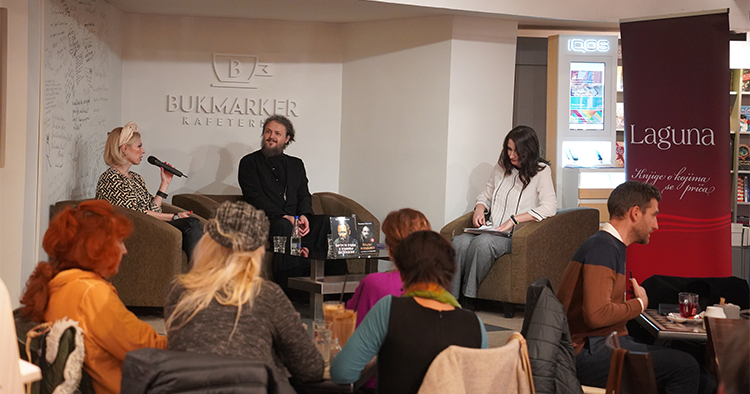
Nesvakidašnja knjiga „Portreti junaka i junakinja Dostojevskog“ vladike Maksima je i monografija i teoretsko-filozofski pogled na književnost velikog ruskog pisca, a u njoj su sabrani i likovni radovi vladike inspirisani Dostojevskim i njegovim junacima. Knjiga je uz prisustvo vladike predstavljena 8. novembra 2022. u knjižari Delfi SKC. O knjizi je govorila i urednica Dubravka Dragović Šehović koja je istakla da i sama izuzetno voli ovog ruskog klasika i da je rasla i sazrevala čitajući njegova dela: „Specifičnost ove knjige u odnosu na druge koje se bave likom i delom Dostojevskog jeste činjenica da je ovo monografija obogaćena sjajnim esejima koji su veoma lepo povezani u celinu tako da u njoj mogu da uživaju i oni koji vole Dostojevskog i oni koji tek treba da ga otkriju.“

Na pitanje o motivima da se ovako studiozno i uz brojnu literaturu bavi Dostojevskim vladika Maksim je odgovorio:

„Čini mi se da je glavni podsticaj za bavljenje Dostojevskim i njegovim junacima bio on sam, to jest njegovo dejstvo na sve nas od davnih dana, ali i u novije vreme. Dostojevski me je oduvek privlačio jer je posmatrao tamnu stranu postojanja, ne samo svetlu, pa samim tim mi je postao zanimljiv. Još je Umberto Eko rekao da se velika literatura bavi gubitnicima. Dostojevski je bio takav i zahvaljujući tome je postao glas bezglasnih i nada za obeznađene. Priče o uspešnima i pobednicima nisu zanimljive. To me je privuklo: njegova dubina i svest da naše postojanje skriva i mračne i svetle strane, i da je veliko umeće prepoznati ih i razlučiti.“

Vladika Maksim je istakao da u svetlu novih političkih zbivanja nije prestalo interesovanje za Dostojevskim na Zapadu.
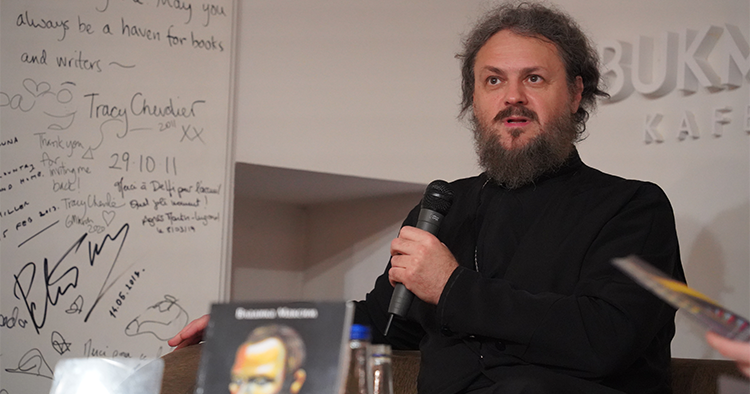
„Kod Dostojevskog nije tema samo Bog, niti je tema samo čovek, ni duša, već iskonska potreba čoveka da živi autentično. On opisuje neuspehe i promašaje na izuzetan način. Možda ne toliko stilski ubedljivo kao drugi ruski pisci, ali u svakom slučaju to čini širokim potezima poput Van Goga koga sam i prepoznao u njemu, a povezao sam ih upravo zbog tragičnosti sa kojom su se nosili.“

Knjiga sadrži brojne radove vladike Maksima, uglavnom akril na platnu, a oslikani su starac Tihon, Ivan Karamazov, Sonja Marmeladova, Klara Olsufjevna, Nikolaj Stavrogin, ali i sam Dostojevski i mnogi drugi likovi.

Izložba likovnih radova vladike Maksima „Silazak u podzemlje“ sa radovima iz knjige trenutno se može videti u Galeriji Narodne biblioteke „Dr Dušan Radić“ u Vrnjačkoj Banji, a publika bi početkom naredne godine mogla da je vidi i u Beogradu.

Izvor: Laguna


SA


People Directory

Zora Mihailovich

Zora Mihailovich is an Artist-in-Residence at the University of Rochester. She did her undergraduate through postgraduate studies at Belgrade School of Music and Academia di Musica "Santa Cecilia" Rome (Italy). She has studied with Carlo Zecchi, Arturo Benedetti Michelangelli and Daniel Pollack. She made her debut with the Belgrade Philharmonic Orchestra at age sixteen. Ms. Mihailovich has given performances in major music centers in North America and Europe including London's Wigmore Hall, New York's Carnegie Hall, London's Royal Festival Hall, Washington's DAR Constitution Hall, Amsterdam Concertgebouw, Warsaw's Philharmonic Hall, and Brussel's Conservatoire Royal, among others..
Read more ...

Publishing

My Brother's Keeper

by Fr. Radovan Bigovic

Rare are the books of Orthodox Christian authors that deal with the subject of politics in a comprehensive way. It is taken for granted that politics has to do with the secularized (legal) protection of human rights (a reproduction of the philosophy of the Enlightenment), within the political system of so-called "representative democracy", which is limited mostly to social utility or to the conventional rules of human relations. Most Christians look at politics and democracy as unrelated with their experience of the Church herself, which abides both in history and in the Kingdom, the eschaton. Today, the commercialization of politics—its submission to the laws of publicity and the brainwashing of the masses—has literally abolished the "representative" parliamentary system. So, why bother with politics when every citizen of so-called developed societies has a direct everyday experience of the rapid decline and alienation of the fundamental aspects of modernity?

In the Orthodox milieu, Christos Yannaras has highlighted the conception of the social and political event that is borne by the Orthodox ecclesiastical tradition, which entails a personalistic (assumes an infinite value of the human person as opposed to Western utilitarian individualism) and relational approach. Fr Radovan Bigovic follows this approach. In this book, the reader will find a faithful engagement with the liturgical and patristic traditions, with contemporary thinkers, Orthodox and non-Orthodox, all in conversation with political science and philosophy. As an excellent Orthodox theologian and a proponent of dialogue, rooted in the catholic (holistic) being of the Orthodox Church and of his Serbian people, Fr Radovan offers a methodology that encompasses the above-mentioned concerns and quests.