A great man is one who collects knowledge the way a bee collects honey and uses it to help people overcome the difficulties they endure - hunger, ignorance and disease!
- Nikola Tesla

Remember, remember always, that all of us, and you and I especially, are descended from immigrants and revolutionists.
- Franklin Roosevelt

While their territory has been devastated and their homes despoiled, the spirit of the Serbian people has not been broken.
- Woodrow Wilson

Председник Матице српске учествовао на Четрнаестој Теслиној духовној конференцији у Њујорку

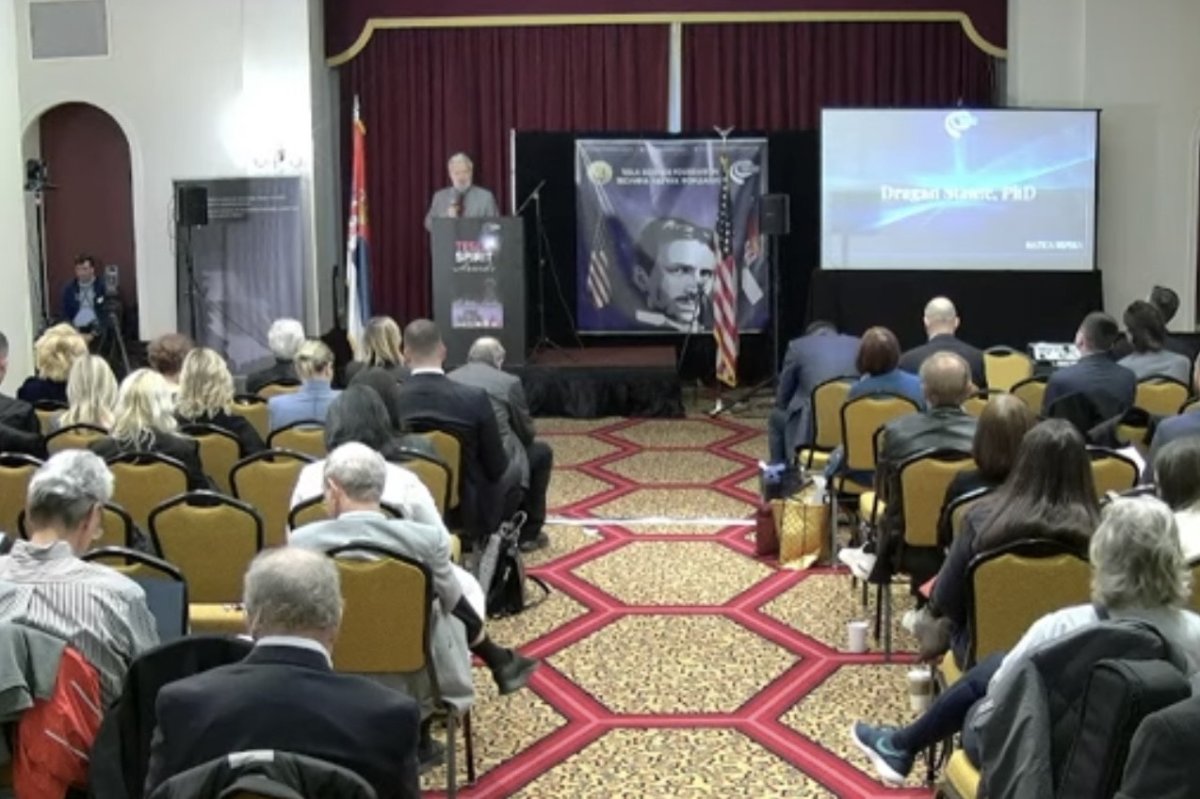
Председник Матице српске проф. др Драган Станић учествовао је на Четрнаестој Теслиној духовној конференцији, коју је у Њујорку у суботу, 10. јануара 2026. године, организовала Теслина научна фондација из Филаделфије, на челу са председником господином Николом Лончаром. Скуп у хотелу „Њујоркер“, где је Никола Тесла живео и умро о Божићу, 7. јануара 1943. године, отворио је генерални конзул Републике Србије господин Владимир Божовић, потом је о Теслином научном делу говорила проф. др Гордана Вуњак Новаковић.

Председник Матице српске говорио је о Теслиној слици Америке и о специфичностима његовог америчког сна у односу на тадашње типичне облике јавног манифестовања тог сна. На скупу су се могла чути веома разноврсна саопштења: од научног излагања о његовим проналасцима, преко описа неговања културе сећања на Теслу, па до сведочења о животу Теслиног народа у САД. Сутрадан, у недељу 11. јануара, председник Станић је, заједно са другим учесницима скупа, присуствовао литургији у српској цркви Светога Саве у Њујорку.

Извор: Матица српска


SA


People Directory

Zora Mihailovich

Zora Mihailovich is an Artist-in-Residence at the University of Rochester. She did her undergraduate through postgraduate studies at Belgrade School of Music and Academia di Musica "Santa Cecilia" Rome (Italy). She has studied with Carlo Zecchi, Arturo Benedetti Michelangelli and Daniel Pollack. She made her debut with the Belgrade Philharmonic Orchestra at age sixteen. Ms. Mihailovich has given performances in major music centers in North America and Europe including London's Wigmore Hall, New York's Carnegie Hall, London's Royal Festival Hall, Washington's DAR Constitution Hall, Amsterdam Concertgebouw, Warsaw's Philharmonic Hall, and Brussel's Conservatoire Royal, among others..
Read more ...

Publishing

My Brother's Keeper

by Fr. Radovan Bigovic

Rare are the books of Orthodox Christian authors that deal with the subject of politics in a comprehensive way. It is taken for granted that politics has to do with the secularized (legal) protection of human rights (a reproduction of the philosophy of the Enlightenment), within the political system of so-called "representative democracy", which is limited mostly to social utility or to the conventional rules of human relations. Most Christians look at politics and democracy as unrelated with their experience of the Church herself, which abides both in history and in the Kingdom, the eschaton. Today, the commercialization of politics—its submission to the laws of publicity and the brainwashing of the masses—has literally abolished the "representative" parliamentary system. So, why bother with politics when every citizen of so-called developed societies has a direct everyday experience of the rapid decline and alienation of the fundamental aspects of modernity?

In the Orthodox milieu, Christos Yannaras has highlighted the conception of the social and political event that is borne by the Orthodox ecclesiastical tradition, which entails a personalistic (assumes an infinite value of the human person as opposed to Western utilitarian individualism) and relational approach. Fr Radovan Bigovic follows this approach. In this book, the reader will find a faithful engagement with the liturgical and patristic traditions, with contemporary thinkers, Orthodox and non-Orthodox, all in conversation with political science and philosophy. As an excellent Orthodox theologian and a proponent of dialogue, rooted in the catholic (holistic) being of the Orthodox Church and of his Serbian people, Fr Radovan offers a methodology that encompasses the above-mentioned concerns and quests.