A great man is one who collects knowledge the way a bee collects honey and uses it to help people overcome the difficulties they endure - hunger, ignorance and disease!
- Nikola Tesla

Remember, remember always, that all of us, and you and I especially, are descended from immigrants and revolutionists.
- Franklin Roosevelt

While their territory has been devastated and their homes despoiled, the spirit of the Serbian people has not been broken.
- Woodrow Wilson

Milo Komenich

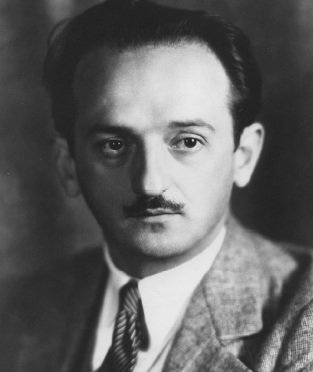
Milo Komenich (June 22, 1920—May 25, 1977) was an American collegiate and professional basketball player.

Komenich, a 6'7 center, played collegiately at the University of Wyoming after a standout high school career at Lew Wallace High School in Gary, Indiana. He played for the Cowboys from 1941–1943 and for the 1945-46 season. Alongside guard Ken Sailors, Komenich led the Cowboys to the 1943 National Championship.

.

Komenich was named an All-American in 1943 and 1946. He was elected to the University of Wyoming athletics Hall of Fame in 2006 and is also a member of the Indiana Basketball Hall of Fame.

During the 1949-50 season, Milo Komenich played in 64 games for the Anderson Packers, averaging 9.9 points per game. Komenich also played for the Fort Wayne Pistons of the National Basketball League and the Dow Chemical and 20th Century Fox teams of the AAU.

From: Wikipedia


SA


People Directory

Епископ Варнава (Настић)

Варнава (световно име Војислав Настић; Гери, Индијана, САД, 31. јануар 1914 — манастир Беочин, СФРЈ, 12. новембар 1964) је био епископ СПЦ.

У САД је живео до своје осме године када је, по завршетку другог разреда основне школе, заједно са родитељима дошао у Сарајево. Овде је наставио своје школовање и, са одличним успехом, завршио основну школу и гимназију са вишим течајним испитом, а потом је, заједно са оцем, отишао у Охрид код Владике Николаја (Велимировића) да затражи благослов за упис на Богословски факултет у Београду.

Read more ...

Publishing

Jesus Christ Is The Same Yesterday Today And Unto the Ages

In this latest and, in every respect, meaningful study, Bishop Athanasius, in the manner of the Holy Fathers, and firmly relying upon the Apostles John and Paul, argues that the Old Testament name of God, “YHWH,” a revealed to Moses at Sinai, was translated by both Apostles (both being Hebrews) into the language of the New Testament in a completely original and articulate manner.  In this sense, they do not follow the Septuagint, in which the name, “YHWH,” appears together with the phrase “the one who is”, a word which is, in a certain sense, a philosophical-ontological translation (that term would undoubtedly become significant for the conversion of the Greeks in the Gospels).  The two Apostles, rather, translate this in a providential, historical-eschatological, i.e. in a specifically Christological sense.  Thus, John carries the word “YHWH” over with “the One Who Is, Who was and Who is to Come” (Rev. 1:8 & 22…), while for Paul “Jesus Christ is the Same Yesterday, Today and Unto the Ages” (Heb. 13:8).