A great man is one who collects knowledge the way a bee collects honey and uses it to help people overcome the difficulties they endure - hunger, ignorance and disease!
- Nikola Tesla

Remember, remember always, that all of us, and you and I especially, are descended from immigrants and revolutionists.
- Franklin Roosevelt

While their territory has been devastated and their homes despoiled, the spirit of the Serbian people has not been broken.
- Woodrow Wilson

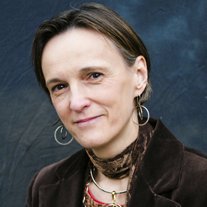
Svetlana Rakic

A native of former Yugoslavia, Dr. Svetlana Rakic earned her master’s degree in art history from the University of Belgrade, Serbia, and her doctorate in art history from Indiana University. She is the author of several books on Serbian Orthodox icons and the interrelatedness of modern art and religious thought. Most recently, she has published the book Art and Reality Now: Serbian Perspectives (New York: A. Pankovich Publishers, 2014).

.

She has published extensively on post-Renaissance and modern art in American, Serbian and Bosnian journals and has given lectures and presentations at many scholarly institutions and organizations such as the Woodrow Wilson Center in Washington DC, the European Science Foundation, the British Academy in London, Columbia University, University of Illinois at Chicago, UC Berkeley, and the SECAC/MACAA Conferences. Rakic is the recipient of Indiana University’s prestigious Esther L. Kinsley Award and Franklin College Faculty Travel and Faculty Excellence awards.

Her paintings dealing with “inner landscapes” have been exhibited in solo and group exhibitions in Bloomington, Terre Haute and Franklin in Indiana, as well as in galleries in Serbia and Germany. In 2007, she received the Puckett Award of Recognition presented by the Swope Art Museum in Terre Haute in a show juried by David Edgar of the Arts Administration Program at the University of North Carolina in Charlotte. In 2004, she received the Pfizer Award of Honor presented by the Swope Art Museum in Terre Haute in a show juried by curator Nato Thompson of the Massachusetts Museum of Contemporary Art.

Since 1996, she has been teaching art history and studio art courses at Franklin College. Most recently she has been invited to teach at the summer program for the Sinoway International Education Group at Sun Yat-Sen University in Guangzhou and at Beijing Normal University in Beijing, China.

Phone: (317) 738-8278 | Email: This email address is being protected from spambots. You need JavaScript enabled to view it.

Source: Franklin College


SA


People Directory

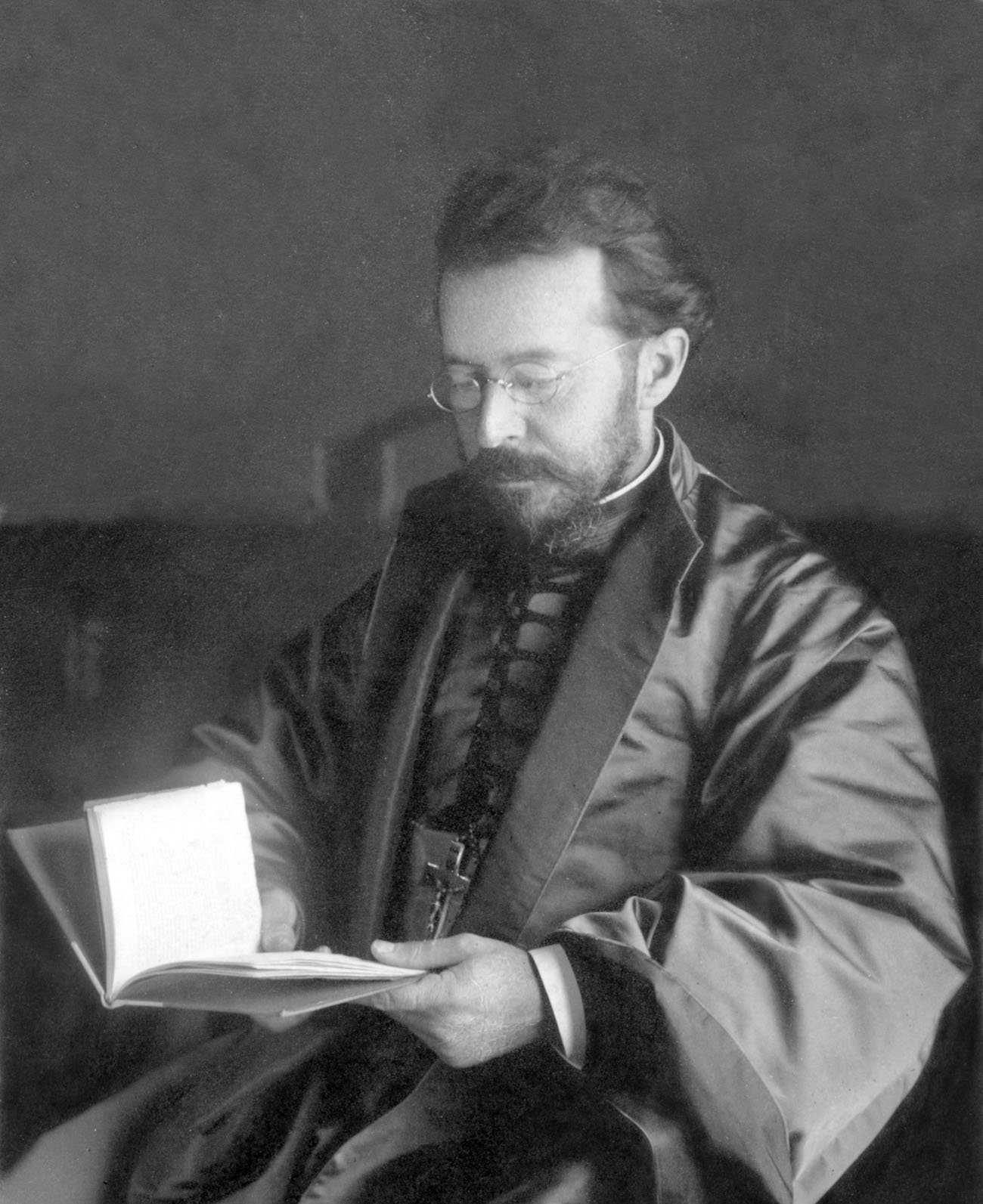
Archimandrite Sebastian Dabovich

Archimandrite Sebastian Dabovich
SERBIAN ORTHODOX APOSTLE TO AMERICA
by Hieromonk Damascene (Christensen)
St. Herman of Alaska Monastery, Platina, California


1. An Apostle of Universal Significance

Born during the presidency of Abraham Lincoln, Archimandrite Sebastian Dabovich has the distinction of being the first person born in the United States of America to be ordained as an Orthodox priest,[1] and also the first native-born American to be tonsured as an Orthodox monk. His greatest distinction, however, lies in the tremendous apostolic, pastoral, and literary work that he accomplished during the forty-eight years of his priestly ministry. Known as the "Father of Serbian Orthodoxy in America,"[2] he was responsible for the founding of the first Serbian churches in the NewWorld. This, however, was only one part of his life's work, for he tirelessly and zealously sought to spread the Orthodox Faith to all peoples, wherever he was called. He was an Orthodox apostle of universal significance.

Read more ...

Publishing

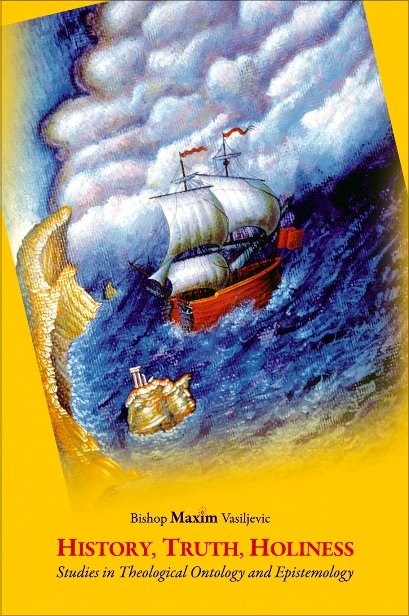
History, Truth, Holiness

by Bishop Maxim Vasiljevic

Bishop Maxim’s first book, described by Fr. John Breck as an “exceptionally important collection of essays” contributing to both the theology of being and also contemporary theological questions, is now available! Christos Yannaras describes Bishop Maxim as “a theologian who illumines” and Fr. John McGuckin identifies his work as “deeply biblical and patristic, academically learned yet spiritually rich.” The first half of the book collects papers emphasizing theological ontology and epistemology, reminding us how both the mystery of the Holy Trinity and that of the Incarnation demand that we rethink every philosophical supposition; it includes chapters on holiness as otherness, truth and history, and the biochemistry of freedom. The second half of the book features lectures dedicated to the theological questions posed by modern theology, including studies of Orthodox and Roman Catholic ecclesiology, liturgics, and the theology of icons.