A great man is one who collects knowledge the way a bee collects honey and uses it to help people overcome the difficulties they endure - hunger, ignorance and disease!
- Nikola Tesla

Remember, remember always, that all of us, and you and I especially, are descended from immigrants and revolutionists.
- Franklin Roosevelt

While their territory has been devastated and their homes despoiled, the spirit of the Serbian people has not been broken.
- Woodrow Wilson

Djordje Popovich

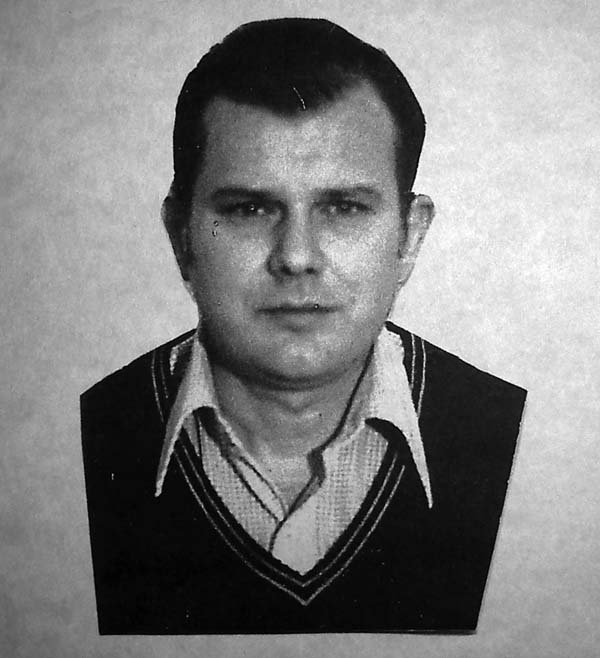
Djordje Rativoj Popovich was born May 5, 1942 in Belgrade, Serbia and passed away on September 8th, 2012 in Portland, Oregon, after a car accident.

Djordje R. Popovich immigrated to the United States in June 19th 1969 from Pula, Croatia. He lived in various places in the USA: Chicago, Santa Ana, and retired to Vancouver, WA. Mr. Popovic was a computer engineer and received high reviews from his employers.

He loved photography and computers. Djordje was very independent, he lived alone, yet took the best care he could of himself and his property, especially his yard. He had big blue eyes and could be very charming. The clerks at his bank were very fond of him.

.

Djordje Popovic wishes were that his entire Estate; money, real estate, personal property, be bequeathed to St. Stephen’s Serbian Orthodox Church. He did this to honor his mother Marija, who was of the Serbian Orthodox faith.

He was buried on Saturday, November 2, 2013, at River View Cemetery in Portland, Oregon.


SA


People Directory

Allex Mandusich

Andjelko "Big Jake Alex" Mandusich is a recipient of the Congressional Medal of Honor, and was one of the greatest Serbian-American heroes of World War I.

He was born on July 13th, 1887 at Sar Planina, Serbia. In 1905, at the age of 18, he immigrated to America.

When the US entered World War I, Mandusich immediately enrolled himself in the Army. During the battle in Amiens region in France in August of 1918, Jake, now a corporal, advanced his men at Chipilly Ridge; there were many casualties and in the heat of the battle Alex realized that all officers had been hit and that he was now the leader of his platoon. His men were pinned down by machine gunfire from a German nest thirty yards away. Under intense fire Manudsich made his way to the nest alone; he pulled out his bayonet and attacked..

Read more ...

Publishing

On Divine Philanthropy

From Plato to John Chrysostom

by Bishop Danilo Krstic

This book describes the use of the notion of divine philanthropy from its first appearance in Aeschylos and Plato to the highly polyvalent use of it by John Chrysostom. Each page is marked by meticulous scholarship and great insight, lucidity of thought and expression. Bishop Danilo’s principal methodology in examining Chrysostom is a philological analysis of his works in order to grasp all the semantic shades of the concept of philanthropia throughout his vast literary output. The author overviews the observable development of the concept of philanthropia in a research that encompasses nearly seven centuries of literary sources. Peculiar theological connotations are studied in the uses of divine philanthropia both in the classical development from Aeschylos via Plutarch down to Libanius, Themistius of Byzantium and the Emperor Julian, as well as in the biblical development, especially from Philo and the New Testament through Origen and the Cappadocians to Chrysostom.

With this book, the author invites us to re-read Chrysostom’s golden pages on the ineffable philanthropy of God. "There is a modern ring in Chrysostom’s attempt to prove that we are loved—no matter who and where we are—and even infinitely loved, since our Friend and Lover is the infinite Triune God."

The victory of Chrysostom’s use of philanthropia meant the affirmation of ecclesial culture even at the level of Graeco-Roman culture. May we witness the same reality today in the modern techno-scientific world in which we live.