A great man is one who collects knowledge the way a bee collects honey and uses it to help people overcome the difficulties they endure - hunger, ignorance and disease!
- Nikola Tesla

Remember, remember always, that all of us, and you and I especially, are descended from immigrants and revolutionists.
- Franklin Roosevelt

While their territory has been devastated and their homes despoiled, the spirit of the Serbian people has not been broken.
- Woodrow Wilson

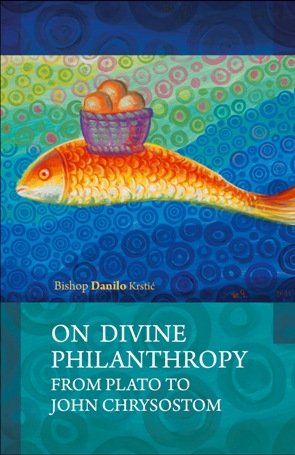
On Divine Philanthropy

From Plato to John Chrysostom

by Bishop Danilo Krstic

This book describes the use of the notion of divine philanthropy from its first appearance in Aeschylos and Plato to the highly polyvalent use of it by John Chrysostom. Each page is marked by meticulous scholarship and great insight, lucidity of thought and expression. Bishop Danilo’s principal methodology in examining Chrysostom is a philological analysis of his works in order to grasp all the semantic shades of the concept of philanthropia throughout his vast literary output. The author overviews the observable development of the concept of philanthropia in a research that encompasses nearly seven centuries of literary sources. Peculiar theological connotations are studied in the uses of divine philanthropia both in the classical development from Aeschylos via Plutarch down to Libanius, Themistius of Byzantium and the Emperor Julian, as well as in the biblical development, especially from Philo and the New Testament through Origen and the Cappadocians to Chrysostom.

With this book, the author invites us to re-read Chrysostom’s golden pages on the ineffable philanthropy of God. "There is a modern ring in Chrysostom’s attempt to prove that we are loved—no matter who and where we are—and even infinitely loved, since our Friend and Lover is the infinite Triune God."

The victory of Chrysostom’s use of philanthropia meant the affirmation of ecclesial culture even at the level of Graeco-Roman culture. May we witness the same reality today in the modern techno-scientific world in which we live.

SA


People Directory

Tatjana Rankovich

Described by The New York Times as an "astonishingly good pianist", Tatjana Rankovich is committed to continuously expanding the boundaries of the traditional repertoire, constantly searching for and discovering new contemporary music and devoting her interest to performing rarely heard works of the past. An innate instinct to create a spectrum of different styles, old and new, known and unknown, is the very essence of her as an artist and it takes place with every one of her concerts.

. Read more ...

Publishing

History, Truth, Holiness

by Bishop Maxim Vasiljevic

Bishop Maxim’s first book, described by Fr. John Breck as an “exceptionally important collection of essays” contributing to both the theology of being and also contemporary theological questions, is now available! Christos Yannaras describes Bishop Maxim as “a theologian who illumines” and Fr. John McGuckin identifies his work as “deeply biblical and patristic, academically learned yet spiritually rich.” The first half of the book collects papers emphasizing theological ontology and epistemology, reminding us how both the mystery of the Holy Trinity and that of the Incarnation demand that we rethink every philosophical supposition; it includes chapters on holiness as otherness, truth and history, and the biochemistry of freedom. The second half of the book features lectures dedicated to the theological questions posed by modern theology, including studies of Orthodox and Roman Catholic ecclesiology, liturgics, and the theology of icons.